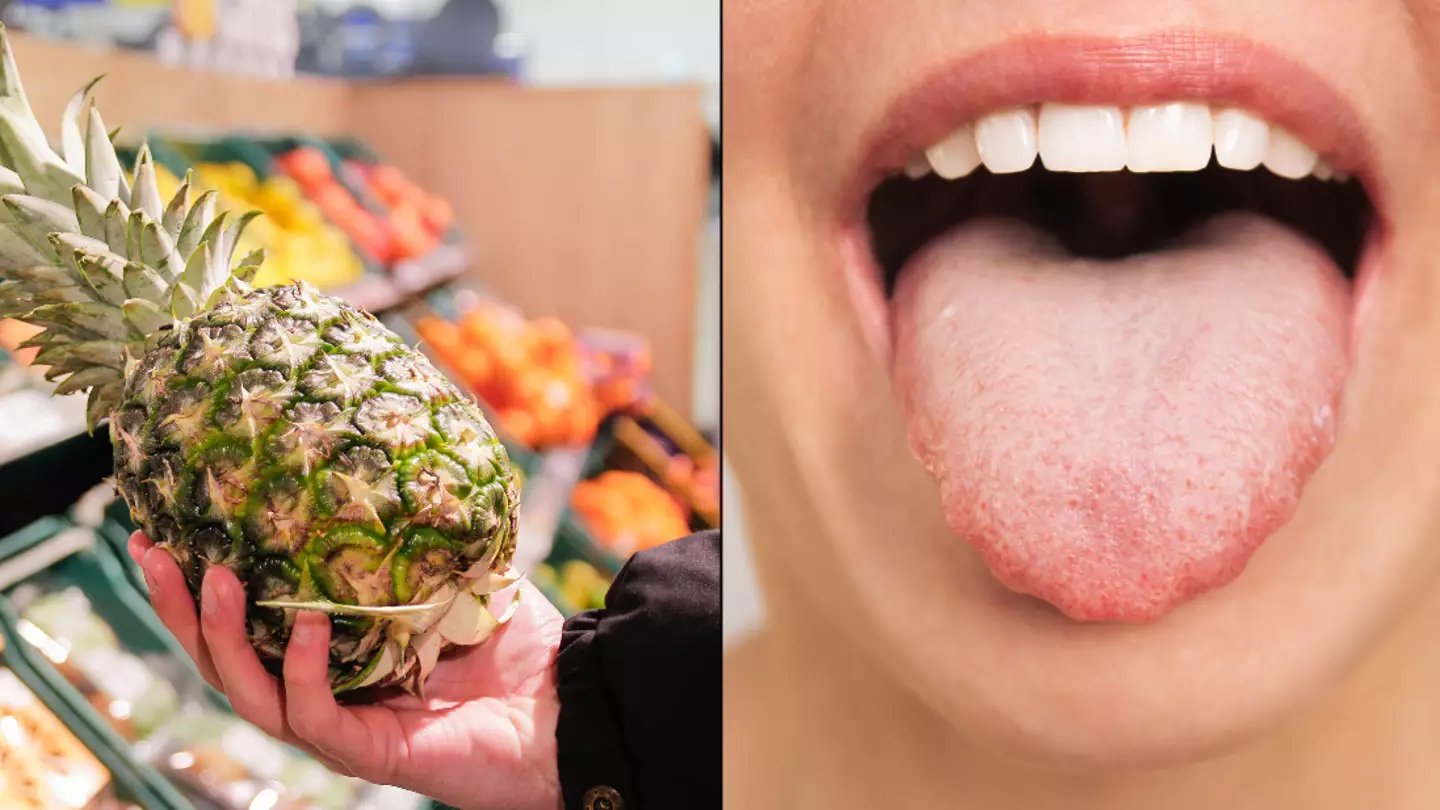
People horrified after finding out why their mouths tingle after eating pineapple
Finally the pineapple prickle is explained
No matter if you’re munching on pineapple to hit your five-a-day goal, because you enjoy the flavor, or for some other reasons, we all share something in common.
Our mouths are really buzzing from it. Whenever we munch on the tropical fruit, we usually feel this strange tingling feeling on our tongues and in our mouths.
People have often thought about why this strange feeling happens, but they never cared enough to look it up. Now, they are shocked to discover the real reason behind it.
SF Microscopy posted a TikTok video that finally explains the strange prickles on pineapples.


The science page wanted to explain things to its followers, so it examined small bits of food using a microscope to see what they were made of.
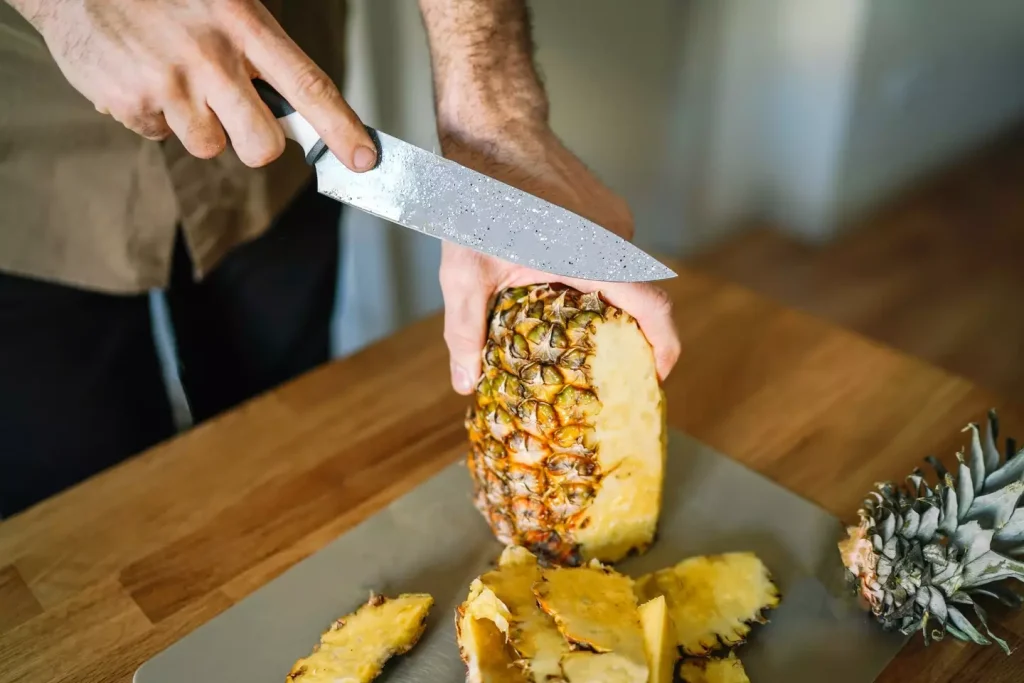
There’s a reason pineapple makes your mouth tingle (Getty Stock Images/ Olha Dobosh / 500px)
So, why does your tongue tingle when eating pineapple?
The narrator goes on to describe how the fruits act in a way that seems aggressive: “That’s because we’re being poked by thousands of tiny needles known as raphides.”
“These crystals of calcium oxalate poke holes in your cell membranes causing irritation!”
The content creator revealed the tiny world inside the pineapple pieces, which looked like tiny needles that poke your mouth and make your tongue feel all weird and irritated after you eat them.
The science of pineapple ‘needles’
The needles are known as ‘raphides’ and they have crystals that don’t dissolve, which are made of calcium oxalate, according to McGill University.
One idea about raphides and how they help plants defend themselves from being eaten is that when a plant gets hurt, its sap or the saliva from an animal can make these tiny needles shoot out. When this happens, the needles can poke the inside of the mouth of the animal (like us humans) and make it feel uncomfortable.

The TikTok video offered an answer to the ‘weird feeling on the tongue.’ (TikTok/@sf_microscopy)
So all this time, pineapples have been fighting back when we’re eating them, unbeknown to most of us.
The revealing video became super popular, racking up an amazing 35.9 million views. It’s obvious that fans of pineapples were eager to share their thoughts on this strange trend.
A TikTok user was so scared by the science behind it that they promised to “never eat pineapple again.”
Some people, on the other hand, weren’t scared away by the prickly tropical fruit at all: “I must be a bit of a masochist, huh?”
“You know the fruits good when it starts fighting back,” joked a third.
@sf_microscopy One of my favorite fruits is pineapple, but every time I eat them, my mouth tingles. I read that the fruit contains raphides! Kiwis, grapes, taro, and yams also have large amounts of these crystals. These needles serve as a defensive function against insect herbivors to deter them from eating the plant’s fruits and protect the seeds. The needles work with other chemcial substances, like bromelain in the pineapple, to amplify the effects. #microscope #microbiology #underthemicroscope #microscopy #microcosmos #nature #pineapple #crystals #fyp #fypage #fypシ ♬ Sunshine – WIRA
Many others flooded in to share their own war stories concerning pineapples that packed a punch: “It always feel so raw afterwards, this makes so much sense.”
“My mouth hurts a lot after eating so many pineapples,” said one fifth grader, while another chimed in, “Sometimes my mouth even bleeds.”
Another praised: “Thank you… never knew tropical fruit had defence mechanisms… very interesting.”
Indeed.
Still gonna eat it though, painapple or not.
Featured Image Credit: Getty Stock Images


